


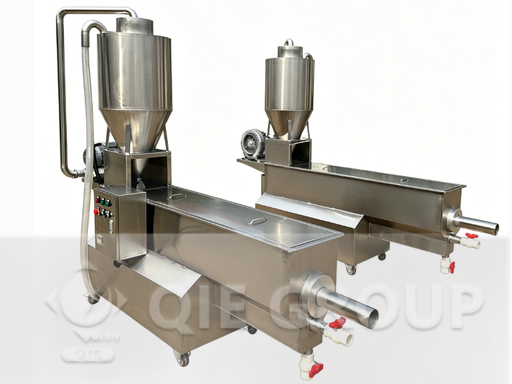
Sesame Seed Cleaning Machine
Overview of Sesame Seed Cleaning Machine
Sesame seed cleaning machines are specialized pre-processing equipment used in deep processing production lines for sesame oil, hulled sesame seeds, and sesame paste. They are primarily used to remove various impurities from raw sesame seeds, such as stones, mud, clods of earth, straw, shriveled seeds, moldy particles, and dust. Depending on the process, they are divided into two main categories: dry sesame seed cleaning machines and fully automatic water-washing sesame seed cleaning machines. They can be used as standalone machines or integrated into an entire sesame oil production line, effectively protecting the downstream seed roasting machine and oil press from abrasion by sand and gravel, improving the quality of sesame seeds and finished sesame oil from the source, and preventing problems such as gritty texture and excessive impurities in the finished oil. The core parts of the machine that come into contact with materials are made of food-grade stainless steel, meeting food production hygiene standards.
Sesame seed cleaning machine classification and detailed introduction
I. Dry Sesame cleaning Machine (Preliminary Cleaning Equipment)
Working principle
It combines the principles of vibrating screen grading, air classification for dust removal, and gravity separation. After the raw materials enter the equipment, the blower removes light impurities (dust, shriveled grains, and broken straw); the vibrating screen removes large impurities (clods of soil and straw); and the gravity table separates some heavy impurities based on the density difference of the materials.
Core advantages
- No water required, zero wastewater discharge, and no wastewater treatment facilities needed for the site.
- Continuous automated operation, small footprint, low energy consumption
- It can simultaneously remove impurities and grade sesame seeds, separating them according to seed size.
limitation
It cannot completely remove the stones that are close to the size of sesame seeds; it is only used as the first initial cleaning step.
Applicable Scenarios
Coarse screening at the front end of raw material pretreatment; in water-scarce areas; pre-processing impurity removal in sesame peeling and processing plants; used in combination with a washing machine.
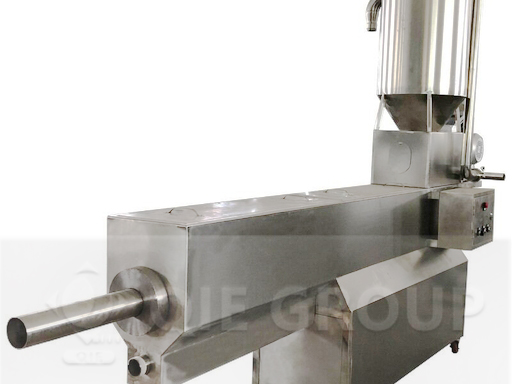
II. Fully Automatic Sesame Washing and Destoning Integrated Machine (Deep Cleaning, Mainstream Model for Oil Pressing Lines)
Working principle
It adopts an integrated structure of water gravity washing, screw conveying and centrifugal dehydration.
- Feeding and washing: Sesame seeds are sent into a water washing tank. The water flow agitates the sesame seeds, which are light and suspended, while heavy objects such as stones and mud sink quickly.
- Bottom stone discharge: Settled stones and silt are automatically discharged at regular intervals;
- Spiral conveyor: Clean sesame seeds are continuously conveyed to the dehydration unit by spiral blades;
- Centrifugal dehydration: High-speed centrifugation removes free moisture from the surface of sesame seeds, resulting in controllable moisture content in the output. No drying is required, and the product can be directly transported to the roasting process.
- Water recycling system: Cleaning water is recycled and reused, reducing water consumption, and wastewater is discharged independently.
Core advantages
- With a stone removal rate of ≥98%, it can efficiently remove adjacent stones, making it the preferred equipment for oil pressing production lines.
- Integrated washing, destoning, conveying, and dehydration processes enable continuous production with minimal labor input.
- Food-grade 304 stainless steel, corrosion-resistant, easy to clean and maintain.
- Variable frequency speed control allows for adjustable feeding speed to adapt to different production capacity requirements.
- This multi-functional machine can clean white and black sesame seeds, as well as oilseeds such as rapeseed, peanuts, and flaxseeds.
limitation
It requires a supporting water source and a simple sewage discharge system.
Applicable Scenarios
Sesame oil pressing plants, small-scale sesame oil processing plants, and hulled sesame production projects all require pre-treatment equipment as standard components of complete oil pressing production lines.
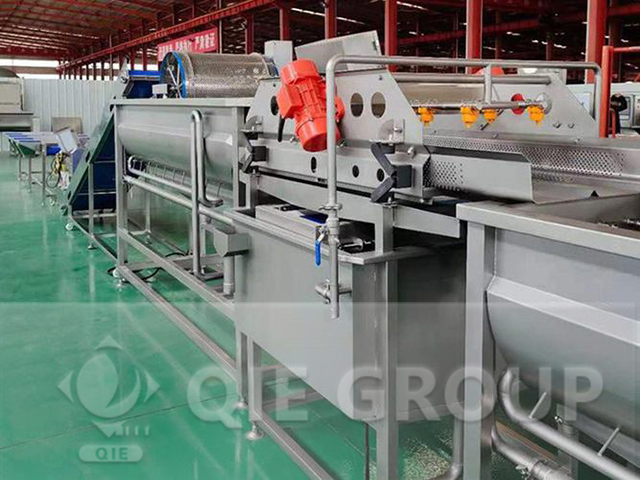
What are the differences between dry cleaning machines and wet washing machines? How do I choose between them?
| Comparison items | Dry Sesame Cleaning Machine | Fully automatic water washing machine |
|---|---|---|
| Impurity removal principle | Vibrating screen + air classifier + gravity separation | Gravity washing + screw conveyor + centrifugal dehydration |
| Can the side-by-side stone be removed? | Cannot be completely removed | Stone removal rate ≥98%, can remove |
| Water | Zero water consumption, zero wastewater | Water source and drainage system required |
| position | Front-end initial cleanup | Deep cleaning of main equipment in oil pressing line |
| suggestion | For use in water-scarce environments or as a pre-screening coarse screen | Oil presses and sesame paste factories are the first choice |
The two are often used together: dry cleaning is used for the first initial rinsing, while wet washing is used for deep cleaning.
Features of Sesame Seed Cleaning Machine
✅ Made of food-grade stainless steel, the material contact surfaces are hygienic and safe, and comply with food processing standards.
✅ Automated continuous production, with seamless feeding, impurity removal, and discharging processes, suitable for integration with assembly lines.
✅ Excellent impurity removal effect, preventing sand and gravel from entering the downstream seed roasting and pressing equipment, and extending the service life of the main unit.
✅ The variable frequency speed control design allows for flexible adjustment of processing capacity, making it suitable for production lines of different sizes.
✅ Stable operation, easy maintenance, easy cleaning, and less prone to residual materials causing mold growth.
✅ It can be purchased as a standalone unit or exported as a complete set with elevators, shellers, seed roasters, and oil presses.
Brief technical specifications of sesame seed cleaning machine (standard water-washing model, customization available)
| project | parameter |
|---|---|
| Processing capacity | 500 ~ 3000 kg/h |
| Contact material | 304 food-grade stainless steel |
| Total installed capacity | Approximately 3.7 kW |
| Standard power supply | 380V/50Hz, overseas voltage can be customized according to customer requirements. |
| External dimensions | 2400×500×1650 mm |
The technological position of sesame seed cleaning machine in sesame oil production line
Raw sesame seeds → Dry sesame cleaning machine (preliminary cleaning optional) → Sesame seed cleaning machine (water washing integrated machine) → Sesame hulling machine (optional) → Bucket elevator → Sesame roasting and roasting machine → Sesame oil press → Sesame oil filter → Refining unit (optional) → Finished oil storage tank

Sesame seed cleaning machine applicable industries
Sesame oil processing plants, small-scale sesame oil mills, hulled sesame processing plants, sesame paste processing enterprises, and complete oilseed pretreatment engineering projects; support for foreign trade projects of complete sets of equipment for domestic and international oil mills.。
FAQ
Q1:What materials can it clean?
This machine is multi-functional and can clean white and black sesame seeds. It is also suitable for cleaning and removing impurities from oil crops such as rapeseed, peanuts, flaxseeds, and sunflower seeds. It is applicable to various oil processing lines.
Q2:Will the moisture content of the sesame seeds be too high after washing, affecting the subsequent roasting process?
No. The washing machine comes with a built-in centrifugal dehydration device. After washing, the sesame seeds are centrifuged at high speed to remove surface water, and the output moisture content is controllable. It can be directly transported to the roasting process without drying, and will not affect the roasting and pressing processes.
Q3:How many tons of sesame seeds can be processed in a day?
The standard model has a processing capacity of approximately 500~3000 kg/h, or about 5~30 tons per day. The feeding speed can be adjusted according to the actual production line requirements through frequency conversion speed regulation, and the production capacity can be customized.
Q4:Is it water-intensive?
The water circulation design allows for the recycling of cleaning water, resulting in low water consumption. It only requires periodic replenishment and separate discharge of wastewater, thus saving water and keeping operating costs under control.
Q5:Is it complicated to operate? How many people are needed?
The equipment is highly automated, integrating continuous feeding, washing, destoning and dewatering. Normally, only one worker is needed to inspect and supervise it, and no manual intervention is required to clean up impurities, saving labor costs.
Q6:Can I buy just one unit? Or do I have to buy a complete production line?
It can be purchased as a standalone pretreatment device, or it can be integrated with bucket elevators, sesame hulling machines, roasting and roasting machines, oil presses, and filters to support complete projects for oil mills both domestically and internationally.
Q7:Can the power supply voltage be made according to foreign standards?
Yes. The standard is 380V/50Hz, but overseas voltages (such as 220V/60Hz) can be customized according to the customer’s country. It can be adapted for export projects.
Q8:How can I ensure that the sesame seeds are not damaged during washing?
The design incorporates water flow suspension washing and spiral gentle pushing, allowing sesame seeds to float and separate naturally in the water. The conveying process is gentle, avoiding mechanical bumps and maximizing the preservation of the sesame seeds’ integrity and quality.
Q9:Does it come with a warranty and after-sales service?
We support customized pre-sales process solutions, installation and commissioning guidance, and after-sales technical support. The specific warranty period and spare parts supply can be confirmed when placing an order. We can provide complete turnkey solutions for production lines as needed.