


Sesame Seed Roasting Machine
Overview of Sesame Seed Roasting Machine
The sesame roasting machine (commonly known in the industry as a sesame seed roasting machine) is a core piece of equipment in the sesame oil hot pressing production line. It takes sesame seeds that have been processed in the pretreatment stage and roasts them evenly using controlled hot air. Roasting denatures the proteins inside the sesame seeds, fully releases the oil, and stimulates the unique aromatic substances in the sesame seeds, directly determining the flavor, color, and oil yield of the finished sesame oil.
This equipment is divided into two main types: continuous hot air roasting machine (large production line model) and intermittent drum roasting machine (small and medium-sized oil mill model). It can be purchased as a standalone unit or integrated into a complete sesame oil processing production line.
Types and detailed introduction of sesame seed roasting machines
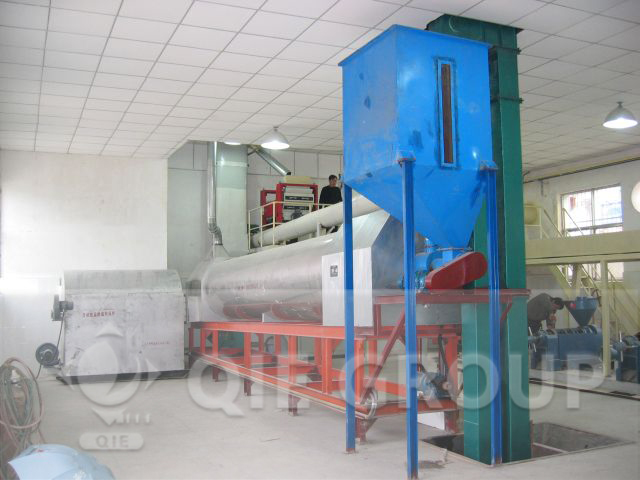
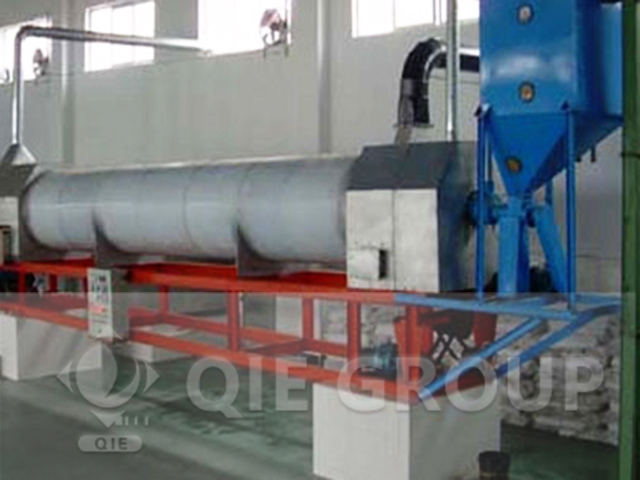
1. Continuous hot air sesame seed roasting machine (the main model recommended for large-scale oil plants, standard equipment for factory production lines)
Working principle
The raw materials are fed into a sealed horizontal stainless steel drum by a bucket elevator, and indirectly heated by clean hot air generated by a hot air furnace. Inside the drum, lifting plates continuously turn the sesame seeds, achieving 360° uniform heating. A PLC temperature control system monitors the roasting temperature in real time to prevent localized scorching. After roasting, the sesame seeds are automatically discharged and enter a cooling and smoke-expelling unit for rapid cooling, and can then be directly fed into the pressing equipment.
Core advantages
- Continuous and uninterrupted feeding and discharging, suitable for 24-hour production lines in factories, ensuring stable production capacity.
- Indirect hot air heating, with no open flame contacting the materials, prevents scorching and black spots, ensuring the pure flavor of the sesame oil.
- Intelligent temperature control is adjustable, and the roasting curve can be modified according to the processing method of white sesame/black sesame and stone-ground sesame oil/machine-made sesame oil.
- The drum body is made of 304 food-grade stainless steel, meeting the hygiene standards of food factories and easy to clean.
- Heat source options include: natural gas, thermal oil, biomass pellets, and electric heating, adaptable to different national energy conditions.
Applicable Scenarios
Projects for large-scale sesame oil factories with a daily output of 5 tons or more, and turnkey sesame oil production lines for export.
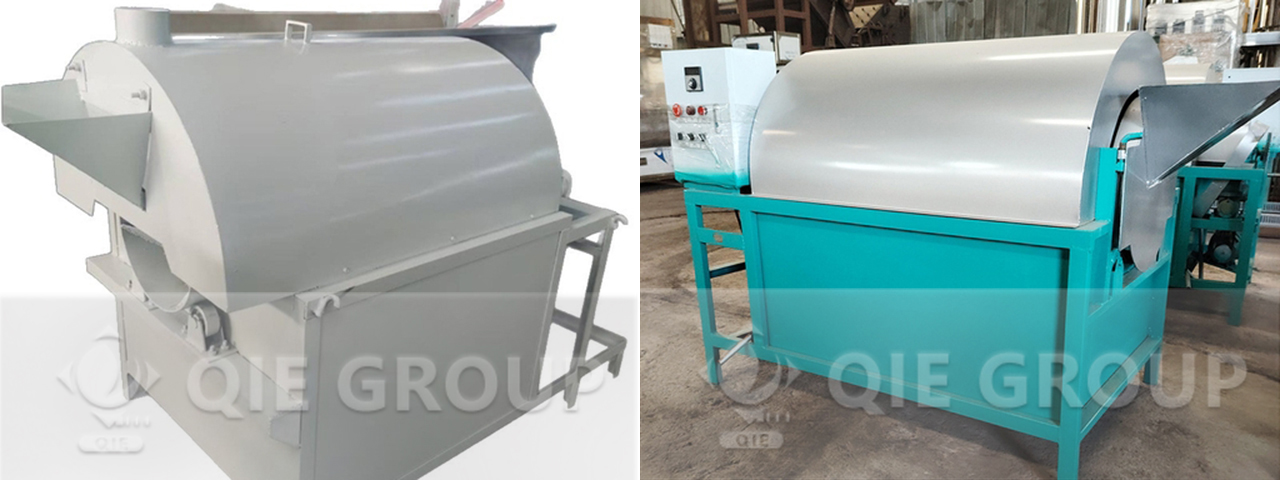
2. Intermittent drum sesame seed roasting machine (for small and medium-sized oil mills/high-quality small-scale sesame oil factories)
Working principle
This batch-feed drum roasting machine uses rotating drums to roast the materials. Heated by gas, electricity, or coal, it completes the roasting of sesame seeds in a single batch. Once the preset temperature is reached, the machine stops and the material is discharged with a single button tilt. Each drum has independent temperature control, allowing experienced operators to fine-tune the roasting process based on the dryness of the sesame seeds.
Core advantages
- Low investment cost, small footprint, simple installation, no need for complex hot air ducts
- Flexible operation, capable of small-batch production and multi-batch trials with different processes.
- Simple to maintain and with a low risk of failure, it is suitable for community oil mills and boutique sesame oil processing plants.
Limitation
Intermittent batch production makes it impossible to achieve fully automated continuous production line operations, requiring relatively more manual intervention.
Applicable Scenarios
Small and medium-sized sesame oil workshops, small-batch production of high-end sesame oil, and multi-oil rotation processing (sesame seeds, rapeseed, and peanuts can all be roasted).
Key features of sesame seed roasting machine
✅ A precise temperature control system, adjustable from 0–300℃, stably locks in the natural aroma of sesame and increases oil yield.
✅ The material contact surfaces are made of 304 food-grade stainless steel, which is corrosion-resistant, easy to clean, and meets food processing standards.
✅ Diverse heat source solutions to support customization for overseas clients with different energy supply conditions.
✅ The special lifting plate structure inside the drum ensures uniform tumbling of materials, preventing localized overheating and scorching.
✅ It can be linked with bucket elevators and cooling and smoke-expelling equipment to seamlessly connect to the entire sesame oil production line.
✅ This machine is multi-functional; in addition to sesame seeds, it can also roast rapeseed, peanuts, sunflower seeds, flax seeds, and other oilseeds.
Technical parameters of sesame seed roasting machine (continuous standard model, customization available)
| project | parameter |
|---|---|
| Processing capacity | 300–2500 kg/h |
| Heating method | Indirect heating with hot air; heat source options include electricity, gas, and biomass pellets. |
| Temperature control range | Ambient temperature -300℃, PLC automatic temperature control |
| Material contact material | 304 food-grade stainless steel |
| power supply | 380V/50Hz, supports customized overseas voltages such as 220V/60Hz, etc. |
| Overall structure | Horizontal long drum + hot air furnace + feeding hopper + smoke cooling discharge unit |
Process sequence in a complete sesame oil production line
- Sesame seed cleaning machine (removes sand, mud, and impurities)
- Sesame hulling machine (optional, special process for hulling sesame seeds)
- Bucket Elevator (Automatic Feeding)
- Sesame roasting machine (this equipment) roasts sesame seeds at high temperatures, ripens them, and enhances their aroma.
- Sesame oil press (physical pressing of roasted sesame seeds to produce crude sesame oil).
- Sesame oil filter (removes oil residue and suspended impurities)
- Sesame oil refining unit (optional, for deep refining to produce national standard grade 1 sesame oil).
- Refined oil storage tanks and filling systems
Process Description: Roasting sesame seeds is the most crucial step in hot-pressing sesame oil. Improperly roasted sesame seeds have a low oil yield and a weak aroma; over-roasting produces a burnt, bitter taste, affecting the quality of the finished oil. This roasting machine features precise temperature control to consistently ensure the quality of the finished sesame oil.

Applicable industries
Sesame oil processing plants, small-scale sesame oil production bases, hulled sesame processing plants, and complete sets of oilseed pretreatment projects; supporting the supply of complete sets of equipment and turnkey projects for global edible oil plants.
FAQ
Q1:What role does a sesame seed roasting machine play in a sesame oil production line?
A:Sesame roasting (seed roasting) is the core process in hot-pressing sesame oil. Controlled high-temperature roasting breaks down the sesame cell structure, increasing oil yield; simultaneously, it stimulates the production of sesame aroma precursors, creating the characteristic rich flavor of sesame oil that directly determines the final taste and color. The roasted sesame seeds are then fed into a sesame oil press for pressing.
Q2:How to choose between continuous and intermittent sesame seed roasting machines?
A:For large-scale automated production lines, continuous hot air sesame roasting machines are preferred, as they can be connected to front-end sesame washing machines and back-end pressing equipment for 24-hour continuous production. For small oil mills, specialty sesame oil mills, and production volumes below 300 kg/h, intermittent drum type machines are recommended, as they require less investment and offer more flexible operation.
Q3:Do sesame seeds need to be cooled after roasting?
A:Yes. High-temperature roasted sesame seeds cannot be pressed directly, as the residual heat will continue to darken the color and produce a burnt taste. Continuous roasting machines come with a smoke-cooling discharge unit, quickly cooling the material to the optimal pressing temperature before directly conveying it to the sesame oil press.
Q4:Can other oilseeds be stir-fried at the same time?
A:Yes, this machine supports roasting various oilseeds such as sesame, peanuts, rapeseed, sunflower seeds, and flaxseed. One production line can switch between processing different raw materials.
Q5:Can the heat source be customized according to the customer’s local energy needs?
A:Support is available, and heating solutions such as natural gas, liquefied petroleum gas, electric heating, and biomass pellets can be selected according to the customer’s site conditions to adapt to the energy environment of factories in different countries.
Q6:Can this equipment be purchased separately, or must the entire production line be purchased?
A:We support single-machine export procurement; we can also package complete production lines with sesame washing machines, sesame shelling machines, oil pressing, filtration, and refining equipment, providing turnkey services including process design, equipment layout, and installation guidance.
Q7:Are there differences in roasting parameters between stone-ground sesame oil and machine-made sesame oil?
A:There is a difference. Small-batch sesame oil requires a higher roasting temperature to bring out its rich, caramelized aroma; standard grade one pressed sesame oil uses a gentler roasting process to retain its lighter color. This equipment’s PLC temperature control system can preset multiple process curves, allowing for free switching between the two production modes.
Q8:Equipment warranty and after-sales support?
A:The main unit comes with a one-year warranty, online remote technical guidance, and overseas engineers can be arranged for on-site installation and commissioning. A complete set of sesame oil production line process solutions is also provided.